


LEO
A STEP TOWARDS AUTONOMy
GAIT TRAINER TO LEARN WALKING WITH CONFIDENCE
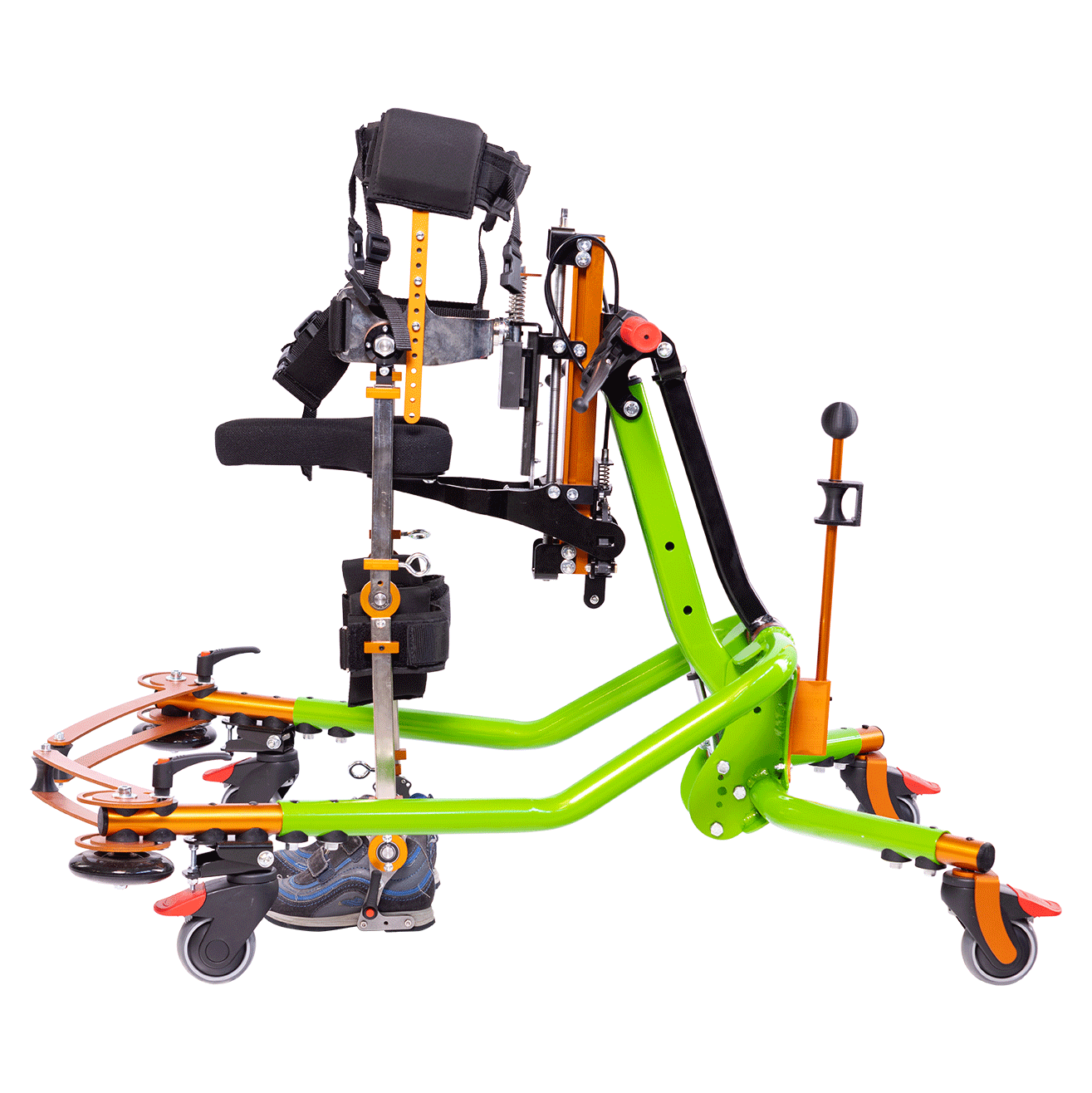
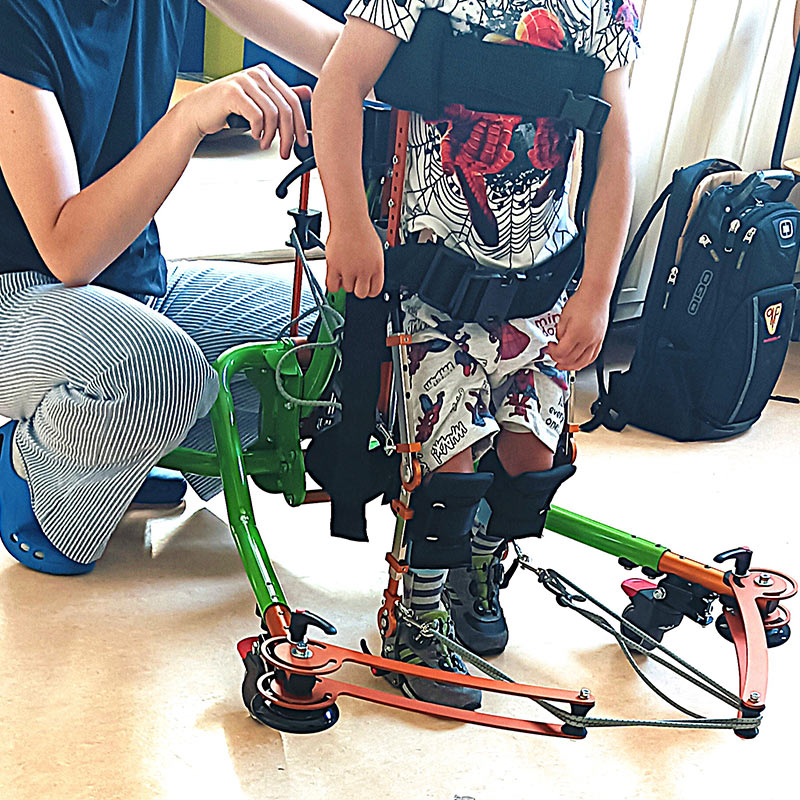
Leo is more than just a walker; it is a companion for the first steps of children with motor disabilities. It gives them the confidence to explore independent walking in a safe and protected manner.


CHILD’S FREEDOM
Freer exploration
LEO is the ideal system to support children with gait disorders as they progress towards independent movement. Designed to promote autonomy and active participation, it allows the child to explore the world in the most natural way possible: by walking.
FUNCTIONALITY & COMFORT
Stability and safety, even ‘hands-free’
Built to adapt to various therapeutic needs, LEO combines advanced assistive functionality with ergonomic gait principles. Stability and safety are key to allowing the child to maintain an upright position and move independently, even without using their upper limbs.
This not only ensures proper weight distribution but also brings significant physiological, cognitive, and relational benefits.
Benefits

Physiological
Clear advantages
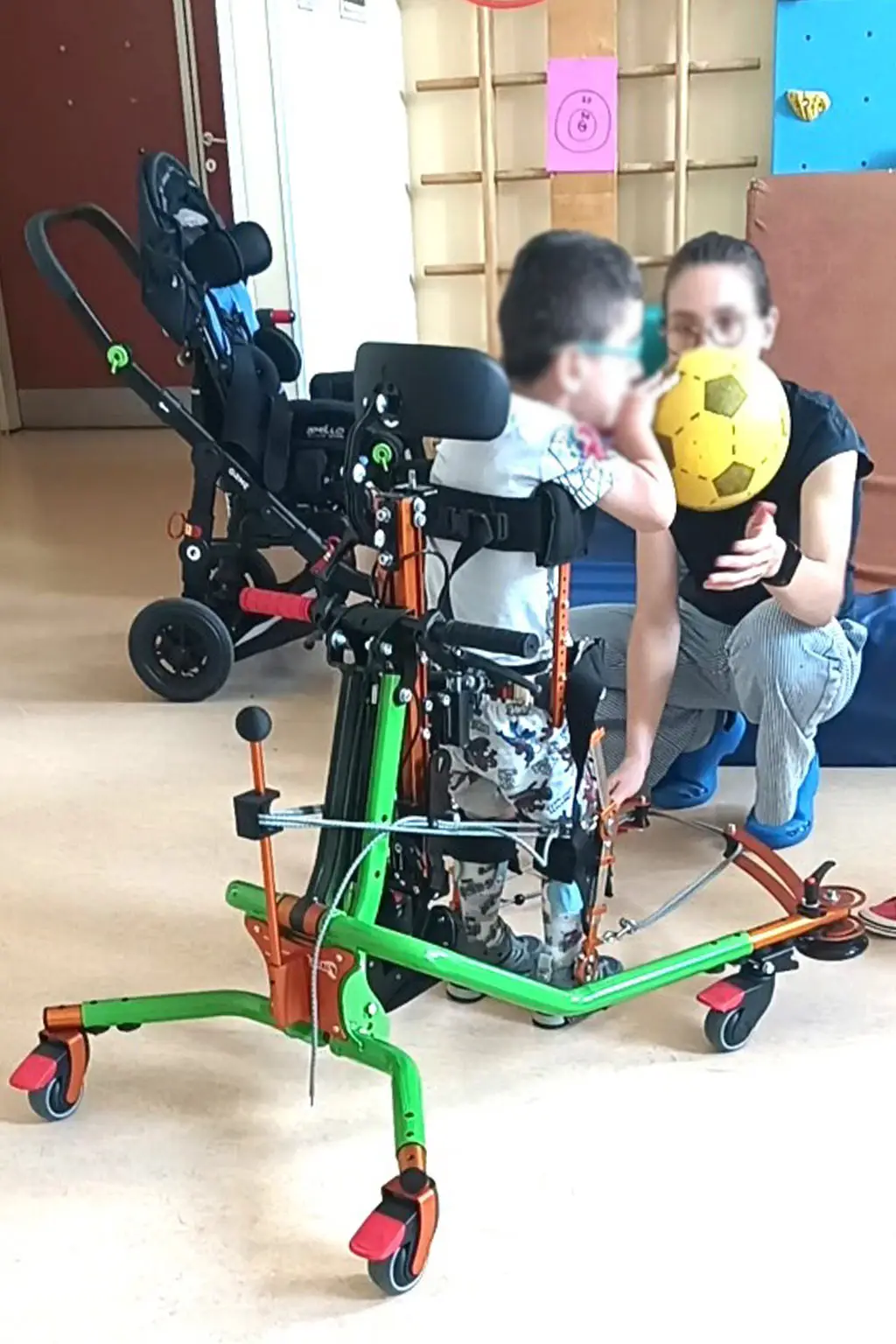
Walking and upright posture bring multiple physiological benefits, including improved breathing, stimulation of the digestive and urinary systems, enhanced blood circulation and bone structure, better head and body control, and elongation of muscle tissues.

Mobility
Therapeutic mobility
Developing efficient and independent walking is a major therapeutic goal for children with motor disabilities. LEO easily adapts to customised therapy programs and to each child’s individual needs.

Psychological
Stimulating social interaction
By enabling autonomous movement, LEO encourages social interaction and active participation, fostering both motor and cognitive development.
PRODUCT DESCRIPTION
Technical advantages
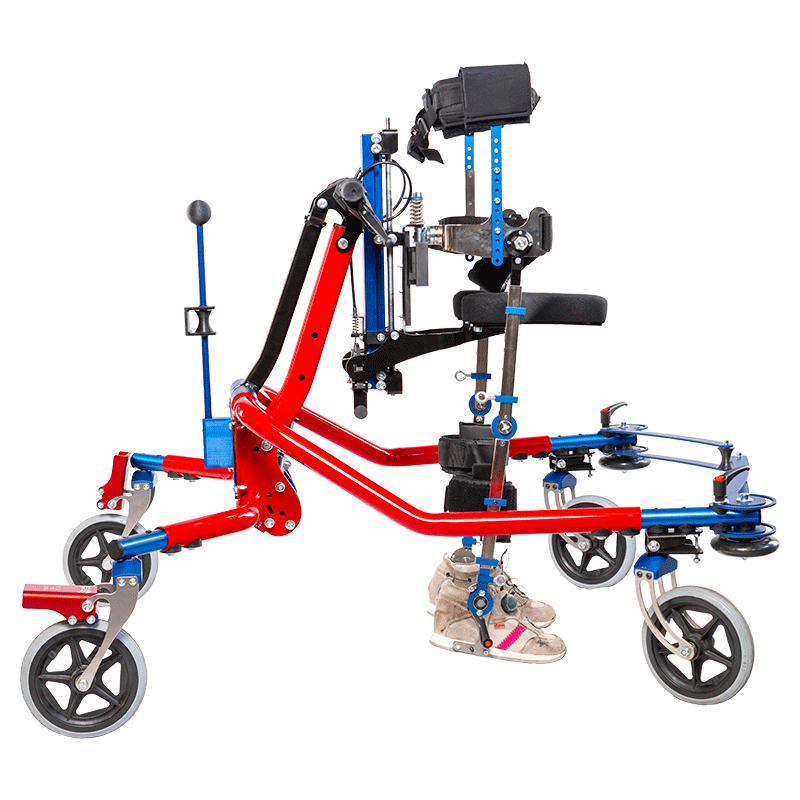
The most significant innovation that the LEO Gait Trainer introduces—compared to other walkers with similar features—is the ability to complete the child’s setup directly on the device. The child is first positioned in the User Support System (‘Orthosis’) while seated on a comfortable seat. They are then brought into an upright static position and finally proceed to the walking phase.
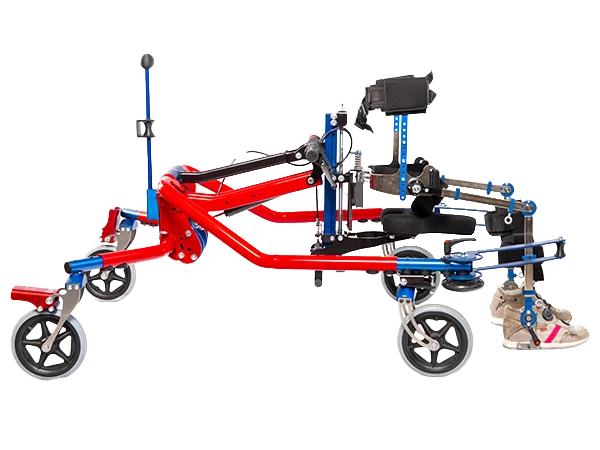
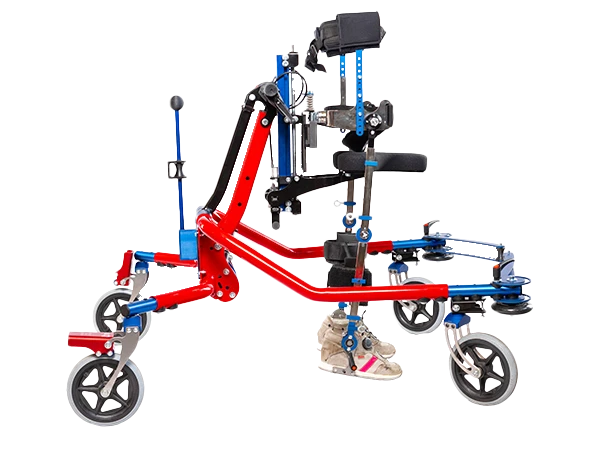
This sequence is made possible by the height adjustment system, operated by activating the gas piston, which allows the User Support System to be raised to various heights relative to the floor.
The device is designed to support the walking cycle by modulating the user’s weight and adjusting both stride length and rhythm through a reciprocating cord system that enables motion transmission between the joints of the lower limbs.
LEO is suitable for rehabilitation programs for conditions such as cerebral palsy, neuromuscular disorders, and spina bifida, offering concrete and adaptable support tailored to each child’s needs.
Comfortable seating
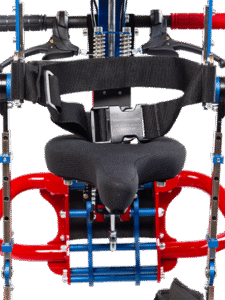
The device includes a comfortable, removable seat that makes it possible to complete the child’s setup directly on the device and remains available for use during rest phases.
Adjustable height
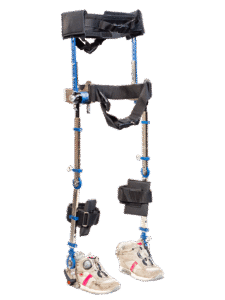
LEO features a floor height adjustment system, activated by a gas piston via a dedicated lever. This function allows the child to transition from the seated preparation phase to the upright position, and then start walking.
Functional design
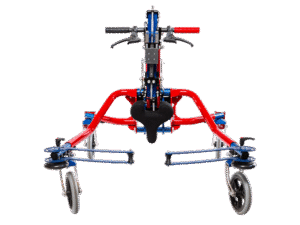
The cross-shaped frame—a hallmark of Biemme Group—once again demonstrates its functional and safety advantages for both users and practitioners. It allows the child to walk more freely and naturally and gives the practitioner closer access.
One of a kind, designed to go further
LEO is not just a gait trainer. It is a daily companion: a device that combines innovation, functionality, and clinical insight to turn every step into an opportunity for growth.
Two sizes, one mission: growing together
LEO is available in two versions, covering users with a height of 50 cm to 140 cm. It perfectly adapts to the child’s stature and grows with them thanks to a solid, flexible, and customisable structure.
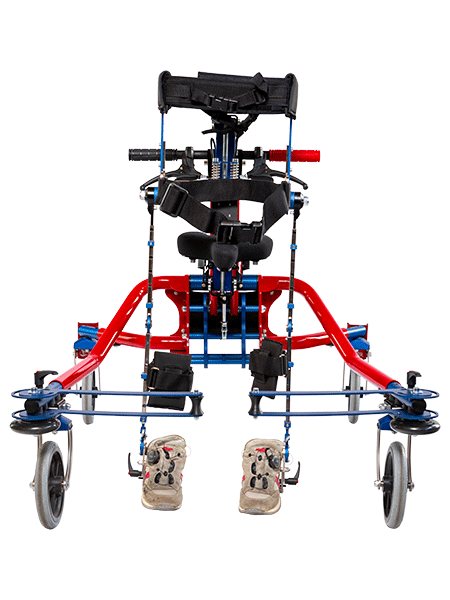
LEO 2
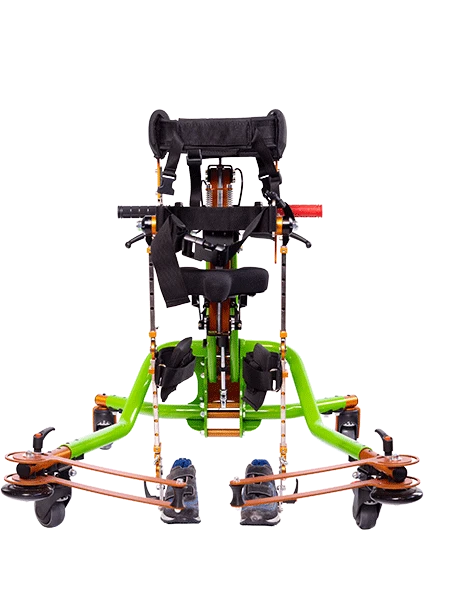
LEO 1
CONTACT US
Every step is a victory. LEO makes it possible
Find out how LEO can make a difference in the life of your child or patient.


